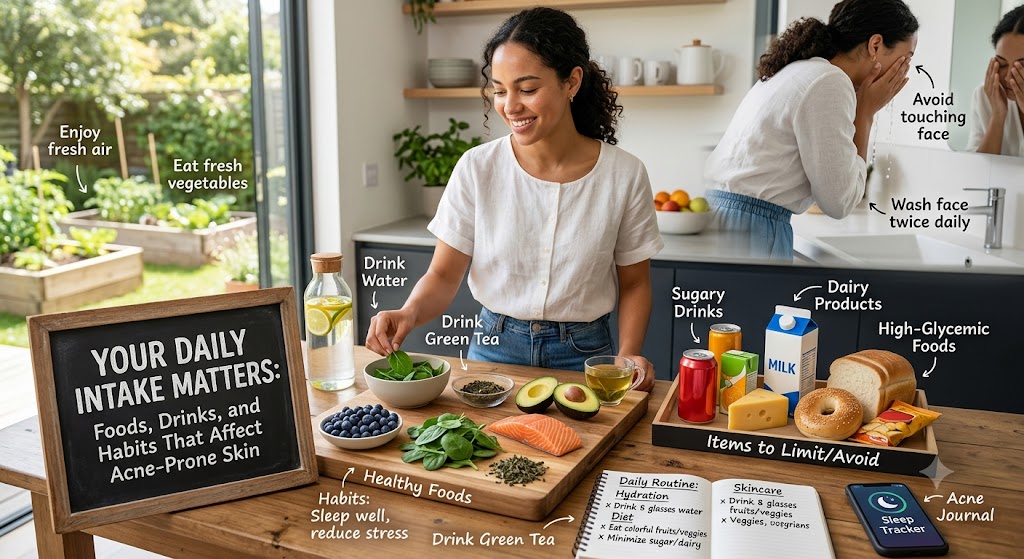
Healthy, radiant skin is built on more than a good skincare routine. While cleansers, moisturizers, and acne treatments all have an important place in managing breakouts, what you consume every day also influences your skin’s health. Your daily intake of food, beverages, and nutrients affects inflammation, hormone regulation, digestion, hydration, and your body’s ability to repair damaged skin. Together, these factors can either support or challenge your journey toward a clearer complexion.
For individuals recovering from addiction, managing mental health conditions, or rebuilding healthy routines after difficult life experiences, nutrition becomes even more valuable. Eating well helps restore physical strength, improve emotional wellness, and create a stronger foundation for healing. Healthy skin is often one of the many benefits that follow.
The Link Between Daily Intake and Acne-Prone Skin
Acne is a multifaceted condition that develops from a combination of genetics, hormones, stress, excess oil production, bacteria, and inflammation. While nutrition is only one piece of the puzzle, research continues to show that dietary habits can influence several of these underlying factors.
Every meal provides your body with information. Nutrient-rich foods help regulate normal body functions, while diets high in processed ingredients and added sugars may contribute to inflammation and hormonal changes that can worsen acne in some individuals.
The goal is not to pursue perfection. Instead, focus on building eating habits that consistently support your overall health.
Foods That Nourish Acne-Prone Skin
Choosing whole, nutrient-dense foods gives your skin the resources it needs to repair itself and maintain a healthy appearance.
Fruits and Vegetables Rich in Antioxidants
Brightly colored fruits and vegetables contain vitamins, minerals, and antioxidants that help protect skin cells from environmental stress and inflammation.
Excellent choices include:
- Blueberries
- Strawberries
- Spinach
- Kale
- Carrots
- Bell peppers
- Sweet potatoes
- Citrus fruits
These foods supply nutrients that contribute to collagen production, healthy skin renewal, and improved skin resilience.
Lean Protein Supports Skin Repair
Protein is essential for tissue regeneration and wound healing. It provides amino acids that help repair damaged skin and maintain healthy cell function.
Good protein sources include:
- Chicken
- Turkey
- Fish
- Eggs
- Beans
- Lentils
- Tofu
Balanced protein intake also helps maintain steady energy throughout the day.
Healthy Fats Help Maintain Skin Balance
Healthy fats strengthen the skin’s natural barrier, helping it retain moisture while reducing inflammation.
Include foods such as:
- Avocados
- Olive oil
- Walnuts
- Chia seeds
- Flaxseeds
- Salmon
Omega-3 fatty acids found in many of these foods may support calmer, healthier-looking skin.
Drinks That Support Better Skin
Hydration plays an important role in maintaining healthy skin.
Water
Water supports circulation, nutrient delivery, temperature regulation, and natural detoxification. Staying hydrated helps the skin function efficiently and maintain its elasticity.
Herbal Tea
Unsweetened herbal teas can contribute to daily fluid intake while providing plant compounds that support overall wellness.
Replacing sugary beverages with water or herbal tea may also reduce unnecessary added sugar consumption.
Habits That Influence Skin Health
Nutrition involves more than individual foods. Daily habits also matter.
Eat Balanced Meals
Meals that include protein, healthy fats, fiber, and complex carbohydrates help stabilize blood sugar and provide consistent energy. Balanced eating patterns may also support hormonal stability.
Avoid Frequent Highly Processed Foods
Highly processed meals and snacks often contain excess sodium, unhealthy fats, refined carbohydrates, and added sugars. While enjoying these foods occasionally is part of a balanced lifestyle, relying on them regularly may contribute to inflammation and poor overall nutrition.
Eat Consistently
Skipping meals can contribute to energy crashes and inconsistent nutrient intake. Regular meals help provide your body with the nutrients it needs throughout the day.
The Gut-Skin Connection
Your digestive system and your skin communicate more closely than many people realize. A healthy gut microbiome supports digestion, immune function, and balanced inflammatory responses.
Foods that encourage gut health include:
- Yogurt with live cultures
- Kefir
- Kimchi
- Sauerkraut
- Whole grains
- Fruits
- Vegetables
A healthier digestive system helps your body absorb nutrients more efficiently, which supports healthier skin over time.
Nutrition as Part of Addiction Recovery and Mental Wellness
Nutrition is a vital part of comprehensive addiction recovery and mental health treatment. Substance use disorders, anxiety, depression, and prolonged stress can disrupt eating habits and deplete important nutrients.
Rebuilding healthy nutrition habits supports physical recovery while also improving mood, concentration, sleep quality, and emotional resilience. Many holistic treatment programs recognize that proper nutrition complements counseling, medical care, spiritual support, and individualized treatment planning.
Whether someone participates in inpatient treatment, outpatient services, or faith-based recovery programs, balanced nutrition provides an important foundation for long-term healing.
Simple Daily Steps for Healthier Skin
Healthy habits are built through consistency rather than perfection.
Start with these practical steps:
Fill Half Your Plate with Vegetables
Adding vegetables to each meal increases fiber, vitamins, and antioxidants that support healthy skin.
Choose Water More Often
Replace sugary drinks with water whenever possible to support hydration and reduce excess sugar intake.
Prepare Healthy Snacks
Keep fresh fruit, nuts, yogurt, or vegetables available to reduce the temptation of processed convenience foods.
Pay Attention to Your Body
Notice how your skin responds to different foods and eating habits. Everyone’s body is unique, and identifying your own patterns can help you make informed decisions.
Conclusion: Healthy Choices Build Healthier Skin
Your daily intake matters because every food choice contributes to your body’s ability to heal, recover, and maintain healthy skin. While no single food can prevent acne, consistent nutrition habits that emphasize whole foods, hydration, healthy fats, lean proteins, and antioxidant-rich produce can support clearer skin and better overall health.
If acne is affecting your confidence or your quality of life, professional guidance can help you develop a personalized plan that addresses both internal and external factors. A compassionate approach that combines nutrition, mental health support, holistic care, and individualized treatment offers the best opportunity for lasting improvement.
Healthy skin begins with healthy habits. By making thoughtful choices each day, you can nourish your body from within, strengthen your recovery journey, and move closer to the clear, balanced complexion you deserve.
